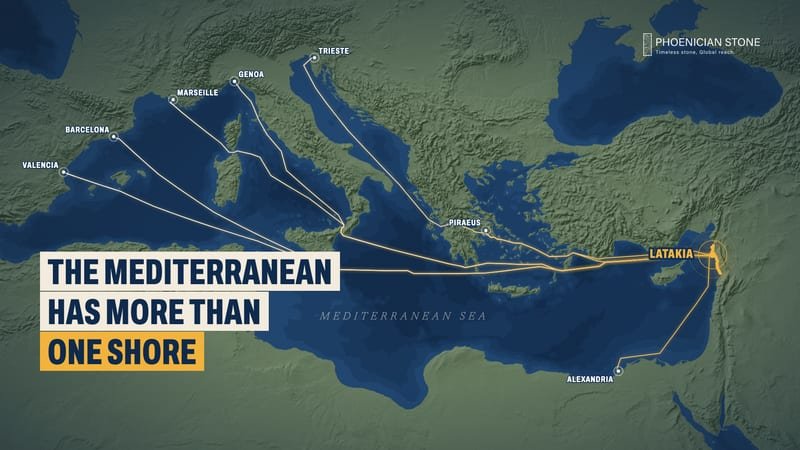
The Mediterranean Has More Than One Shore
On 22 October 2026, six new gantry cranes arrived at the port of Latakia.
Built to move and stack shipping containers, their arrival marked another step in the modernisation of one of Syria's principal maritime gateways. For a coastline whose commercial potential has long exceeded its international reach, such developments carry considerable significance.
A few miles north of the modern port lie the remains of Ugarit.
More than three thousand years ago, the city occupied a position well suited to commerce. A sheltered harbour faced the Mediterranean, while a passage through the coastal mountains opened towards the Syrian interior and Mesopotamia.
Merchants from Cyprus brought copper, goods passed between distant markets, and Ugarit prospered through its ability to connect the country behind the harbour with the world beyond it.
The geographical advantage was considerable. It remains so today.
Across the Mediterranean, certain places have become inseparable from the stones they produce. Carrara marble, the travertine of Tivoli, Greek marble and the established limestones of Turkey are recognised throughout international architecture.
Behind those reputations lie generations of quarrying expertise, production capabilities and commercial relationships. The quality of the material is essential, but so is the infrastructure that allows it to reach an architect or importer thousands of miles from its source.
Syria occupies another shore of this same sea.
Its natural stone industry offers limestone, travertine, basalt and other architectural materials with distinct geological and aesthetic qualities. Yet for much of the past two decades, Syria has remained relatively distant from many international markets in which these materials might otherwise have found a place.
That distance was largely commercial rather than geographical.
The ports continued to operate, and the country's stoneworking traditions endured. What became more difficult were the international connections through which materials could be introduced, purchased and delivered with confidence.
In the natural stone industry, those connections are fundamental.
A slab may leave the saw precisely cut, its colour carefully selected and its surface beautifully finished. It must still be packed, transported and delivered in the condition promised. Every stage contributes to the reputation of the supplier and, ultimately, to the confidence of the buyer.
This is where the renewed development of Latakia's port becomes particularly relevant.
In May 2025, the international shipping group CMA CGM signed a new agreement to develop and operate the port's container terminal. Investment in equipment and infrastructure has since begun taking visible form, with the six cranes delivered this October forming part of a wider modernisation programme.
Such improvements take time to realise their full value. Nevertheless, they strengthen an essential link between Syria's productive industries and the international markets they seek to serve.
For Phoenician Stone Group, that connection is central to our work.
Our quarrying, production and sourcing relationships across Syria give us access to a varied natural stone industry, while our international activities bring its materials to the attention of architects, importers and distributors abroad.
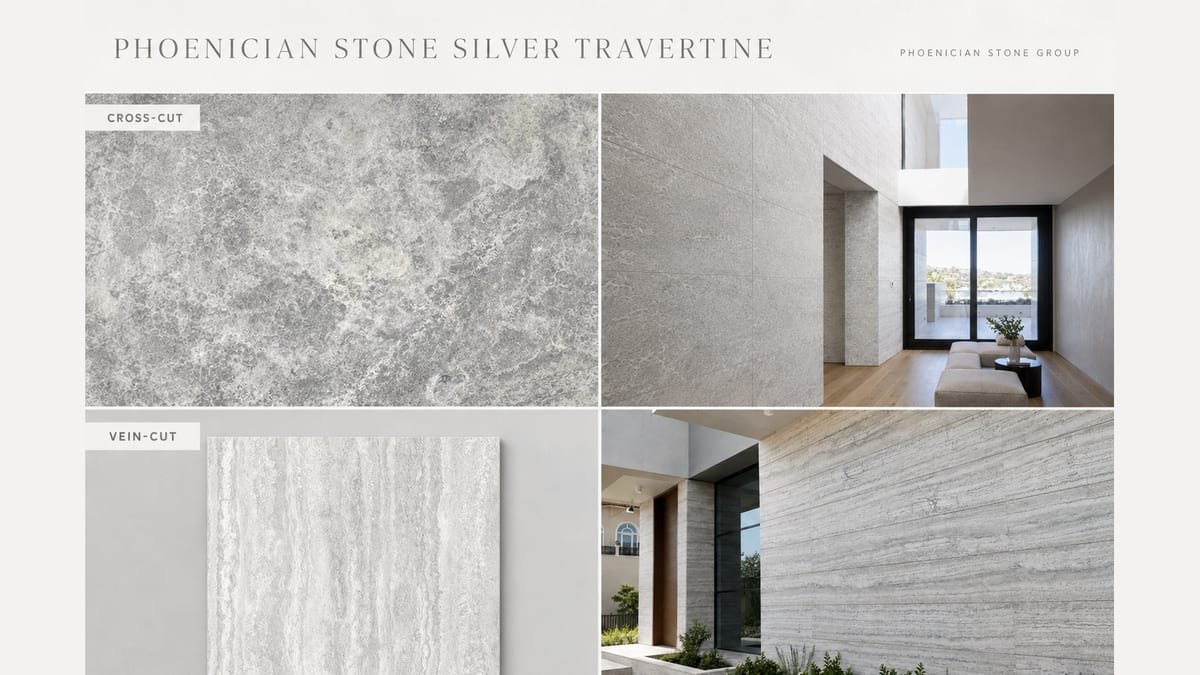
From pale Syrian limestones and fossil shellstone to silver travertine and volcanic basalt, each material must be considered individually. Its appearance matters, but so do its available dimensions, consistency, processing requirements and suitability for the intended application.
Syria's Mediterranean position offers a meaningful advantage in connecting those materials with markets across Europe, North Africa and beyond.
For international buyers, however, geography is only part of the equation. Syrian natural stone must earn its place alongside established Mediterranean materials through the same standards of quality, production capability and dependable delivery.
An address on the Mediterranean does not, by itself, establish a stone's reputation. That reputation is built through accurately selected materials, capable workmanship and orders fulfilled as agreed.
The port provides the connection. The industry has the opportunity to make it count.